Logical Fallacies

LogFall

A practical logical-fallacies reference with clear explanations, usable examples, and teaching tools.

Category

Formal

Breakdowns in deductive structure where the conclusion does not follow from the form.

Entries

13 fallacies in this category.

Diagnostic prompt

If the premises were true, would the conclusion still fail to follow?

Category vs. family

A category is a diagnostic lens, so a fallacy may appear in more than one category. A family is the broader umbrella that gives the fallacy its single main home.

Affirmative conclusion from a negative premise

Occurs when a syllogism tries to draw a positive conclusion even though one of the premises is negative in a way that cannot support that conclusion.

Formal
Intermediate High school

Affirming a disjunct

Occurs when someone treats an ordinary 'or' as if it were exclusive and concludes that one option must be false because the other is true.

Formal
Advanced Advanced undergraduate
Affirming the consequent

Occurs when someone reasons from 'if A, then B' and then wrongly infers A merely because B is observed.

Formal
Advanced Advanced undergraduate

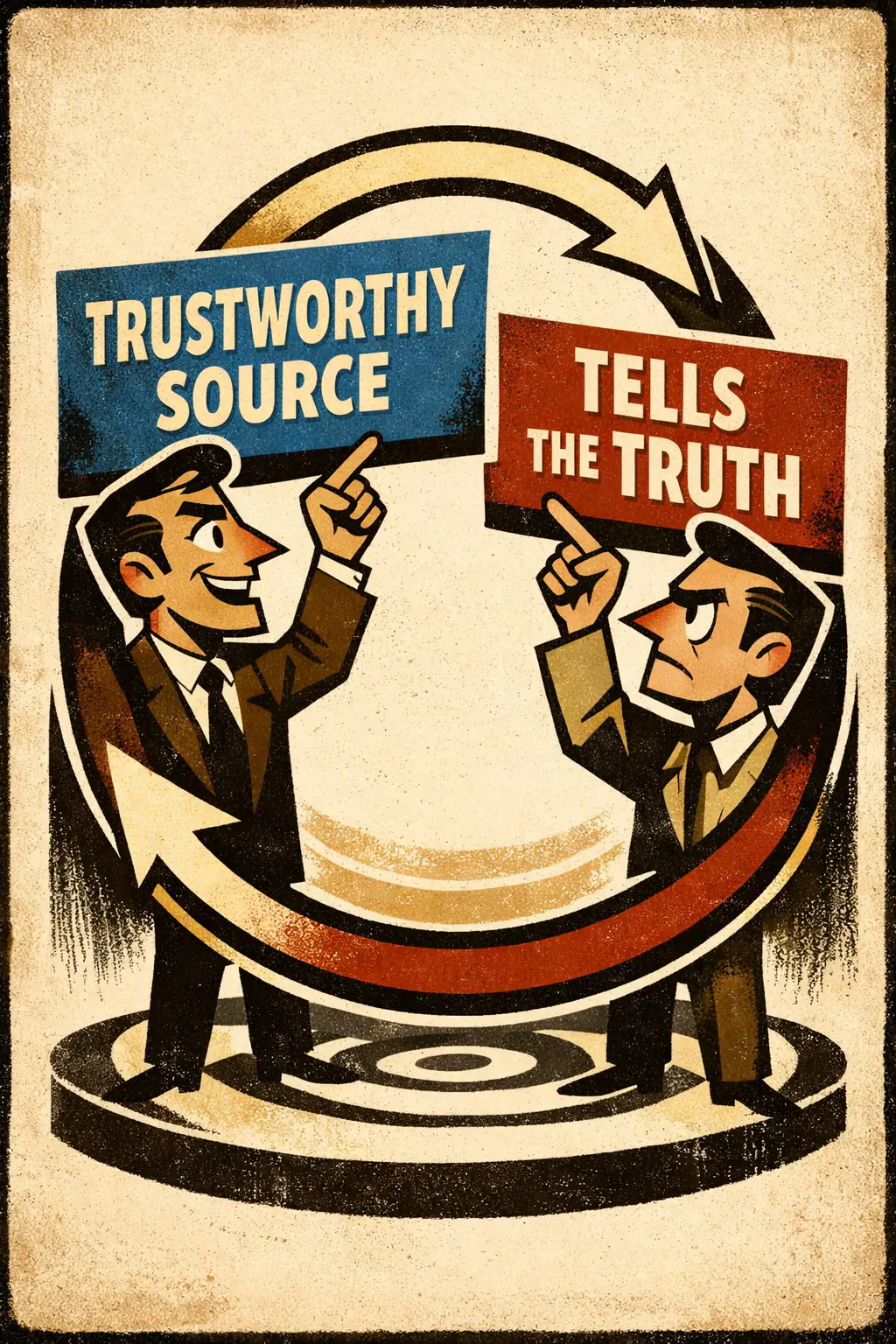
Begging the question

Occurs when an argument quietly assumes the very point it is supposed to prove, so the conclusion is built into the premises.

Formal
Foundational Middle school+

Denying the antecedent

Occurs when someone reasons from 'if A, then B' and then wrongly infers 'not B' merely because A is absent.

Formal
Advanced Advanced undergraduate

Exclusive premises

Occurs when two negative premises are used in a syllogism even though they fail to establish the positive link the conclusion requires.

Formal
Intermediate High school

Existential fallacy

Occurs when a conclusion assumes that something exists even though the premises never established that any such thing exists.

Formal
Intermediate High school

Four terms fallacy

Occurs when a syllogism seems to use three terms but actually uses four because one term shifts meaning halfway through the argument.

Formal
Intermediate High school

Illicit major

Occurs when a syllogism distributes the major term in the conclusion even though the major premise never distributed it there.

Formal
Intermediate High school

Masked man fallacy

Occurs when two names or descriptions refer to the same thing, but a belief or knowledge context blocks simple substitution and the argument ignores that.

Formal
Intermediate High school

Negative proof fallacy

Occurs when a claim is treated as true because it has not been disproved, or false because it has not been proved.

Formal
Intermediate High school

Square logic

Occurs when an argument becomes so internally tangled that its pieces no longer form a coherent chain from premise to conclusion even though it sounds intricate.

Formal
Intermediate High school

Undistributed middle

Occurs when two things are linked to the same broader category and the argument wrongly infers that one of them must therefore be the other.

Formal
Intermediate High school